THE FRONT ROW FOR A NEW MEDIUM
At L1VE, I lead the design department for the next generation of live entertainment on Meta Quest and Apple Vision Pro. I shape product & design strategy, mentor designers, and turn emerging XR technology into intuitive experiences that millions can step into.
„Even the most perfect reproduction of a work of art is lacking in one element: its presence in time and space, its unique existence at the place where it happens to be“
Walter Benjamin
BEFORE THE PRODUCT, THERE WAS ONLY TECHNOLOGY
The technology existed, but the product didn't. Cameras that could capture a live event and the streaming pipeline to deliver it were in place; what was missing was everything that turns raw capability into something a person can pick up, understand, and want to step into. No flows, no interface, no design system, no brand experience, no product. Working with a cross-functional team, I led the design that turned that base technology into a market-ready spatial product. There was no established pattern to follow: almost every core decision was the first draft of a convention that didn't exist yet. That's the work I do best, taking a powerful but unshaped technology and giving it a form people actually want to live inside.

BUILDING THE FOUNDATION
When I joined, L1VE's design team was one person: me. Today it's ten - designers, UX researchers, art, and tech, a whole design function that I hired, shaped, and lead.
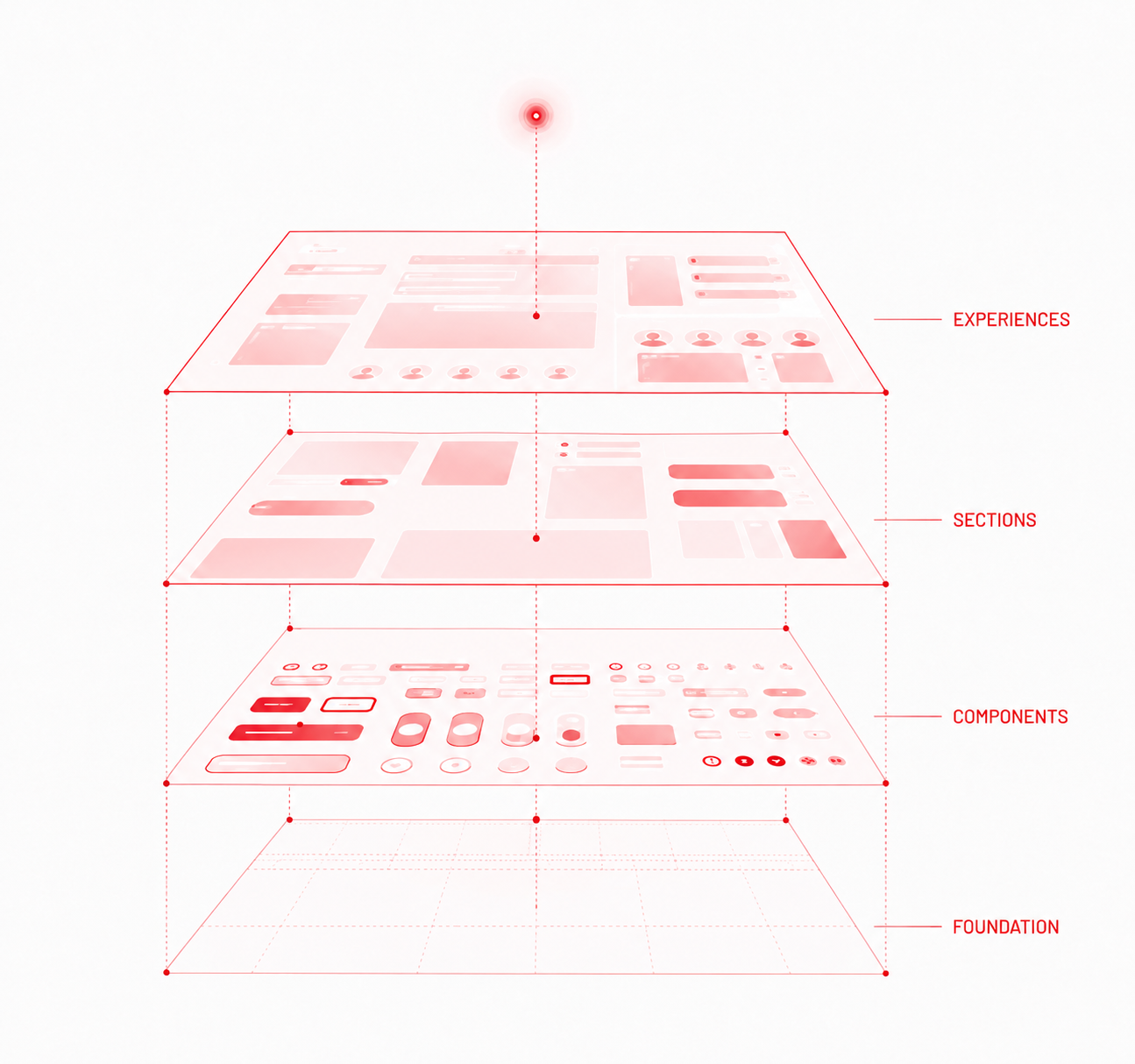
Every product people love stands on scaffolding nobody sees, and at L1VE we built ours from scratch, the component library and design system in Figma, modular and section-based. The real work was building a culture to keep it alive , running in parallel with the usual dailies and Jira sprints, not instead of them.
I set up Design Process & Structure, a standing session where we curate and clean the system so it never drifts into chaos and there's always a room that belongs to it. I set up Design Review & Feedback, where any designer can critique any other's work, whatever their level, whoever they are, and actually be heard.
And I wrote our Design Philosophy: why we design, how we design, the thinking underneath all of it, so a new designer can read it once and know exactly where they stand. It's the least glamorous part of this case study.
It's also the part that compounds, because good structure is just design that lets everyone else do their best work.
DESIGNING FOR PRESENCE
I design the full journey: onboarding, browsing an evolving library of events, event detail and registration, and the spatial interface users inhabit once they're inside. Every choice carries a constraint flat design never has, presence.
A card, a scroll, a transition either deepens the feeling of being there or breaks the illusion. I run continuous usability testing on live builds, hunting for the exact moments where the experience holds and where it snaps, and fixing them before a real audience ever sees them. Designing in three dimensions rewrote most of what I thought I knew about UI, and that's exactly why it's the most interesting work I've done.
ONE VISION, MANY HANDS
Not everything ships from my own cursor, at this scale, it shouldn't. A growing part of the job is creative direction: setting the visual language and steering the people who bring it to life. I direct in-house designers and freelancers on L1VE's outward-facing craft , brand visuals, marketing and App Store assets, the key art that gives a new medium a face, and I own the copy that goes with them. My designers develop the visuals and back up the UX team; I set the bar, brief the work, and edit it until it's on-brand and on-message. Turning a loose idea into a clear direction, handing it to the right maker, and pushing it round by round until it feels inevitable, that's the leverage that lets a small team punch above its weight.
AT THE AI–SPATIAL EDGE
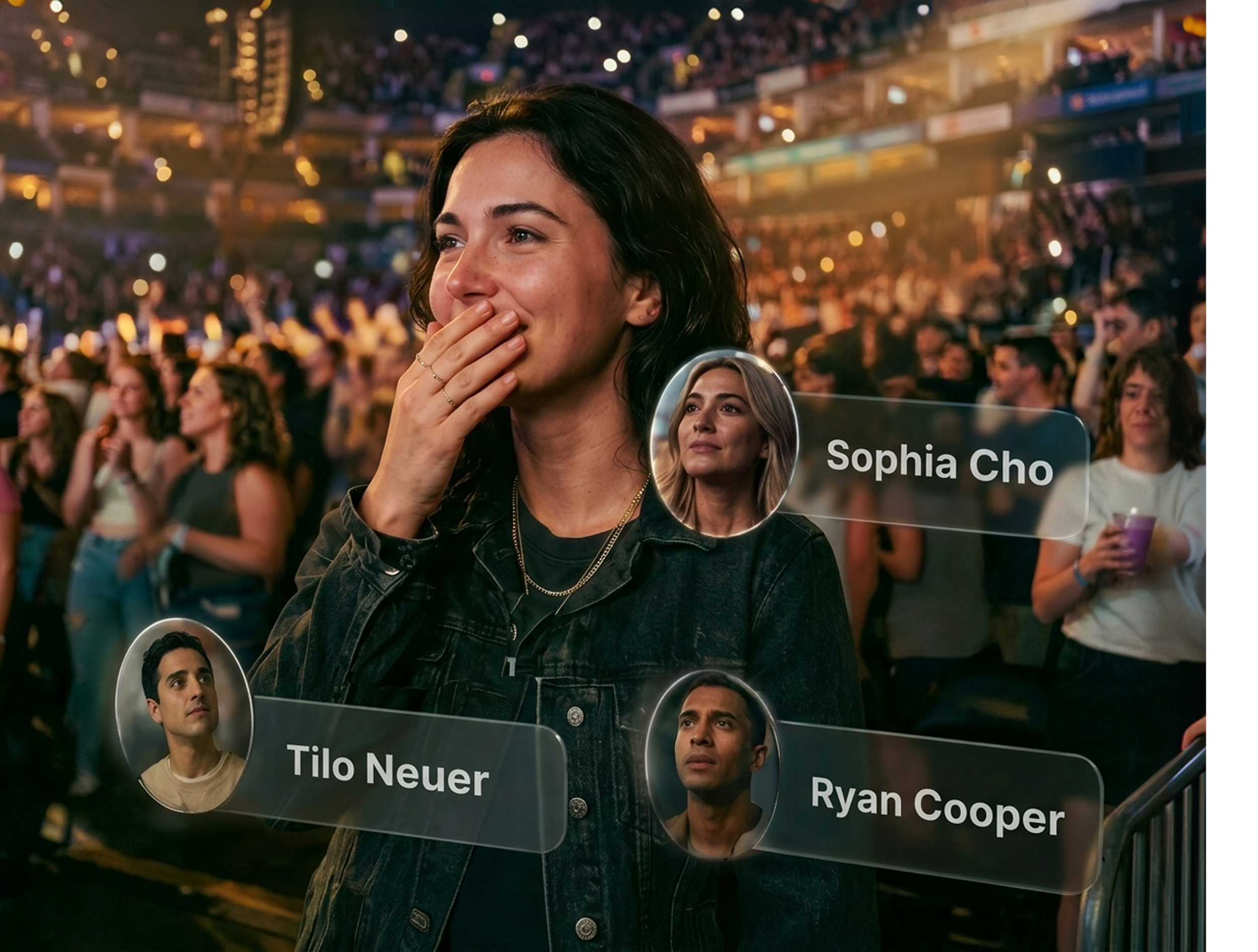
With the team, I co-conceived a feature that uses the headset's body-tracking to drive a generative image pipeline, turning a user's pose inside VR into a shareable, developing "polaroid" they can send to friends. Small feature, big thesis: spatial computing and generative AI produce interaction patterns that simply didn't exist before, and someone has to design them first. Working where these two frontiers meet isn't a side interest for me, it's where I think the next decade of interaction design gets written, and I want to be one of the people writing it.

L1VE AT THE HIGHEST STAKES
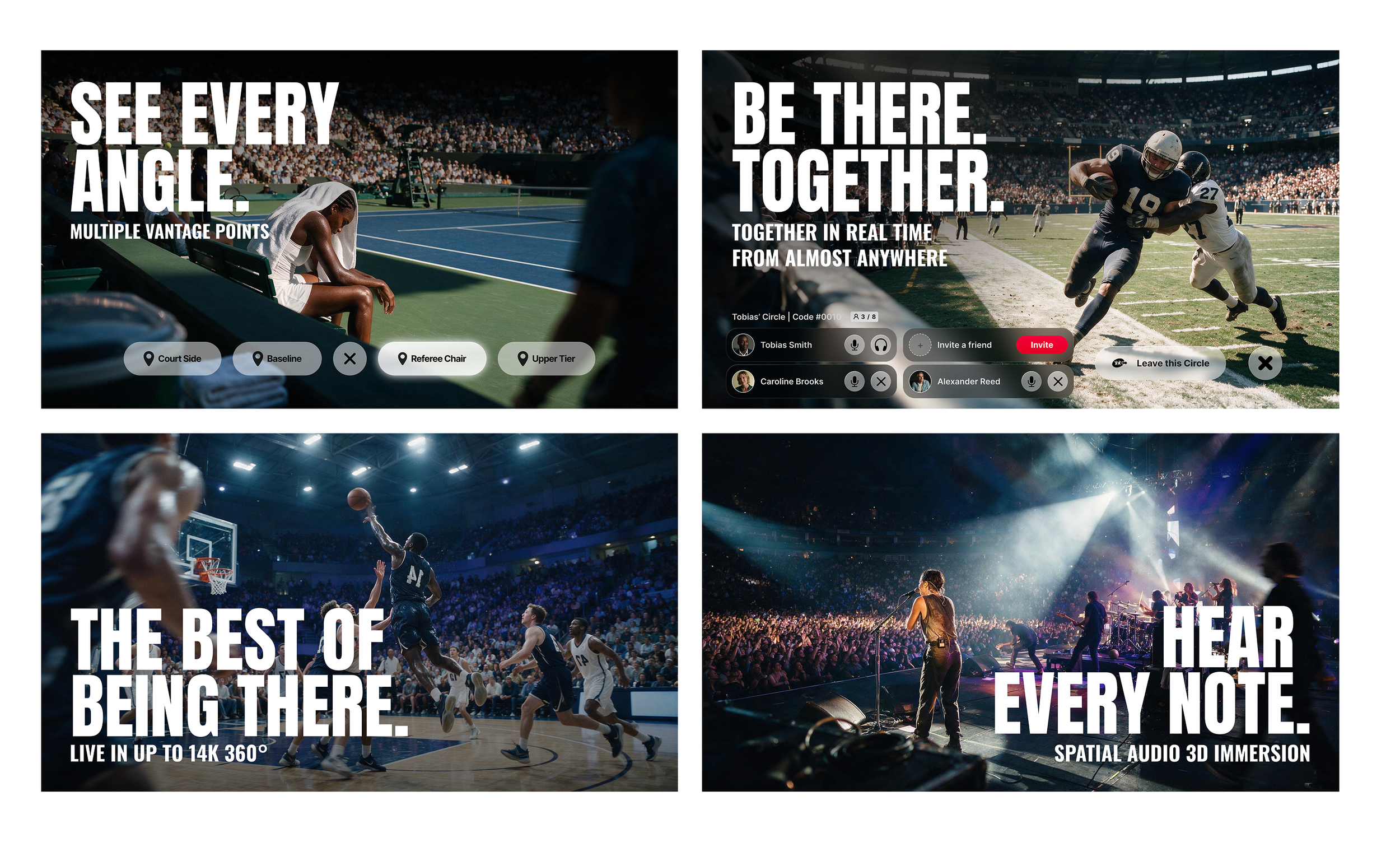
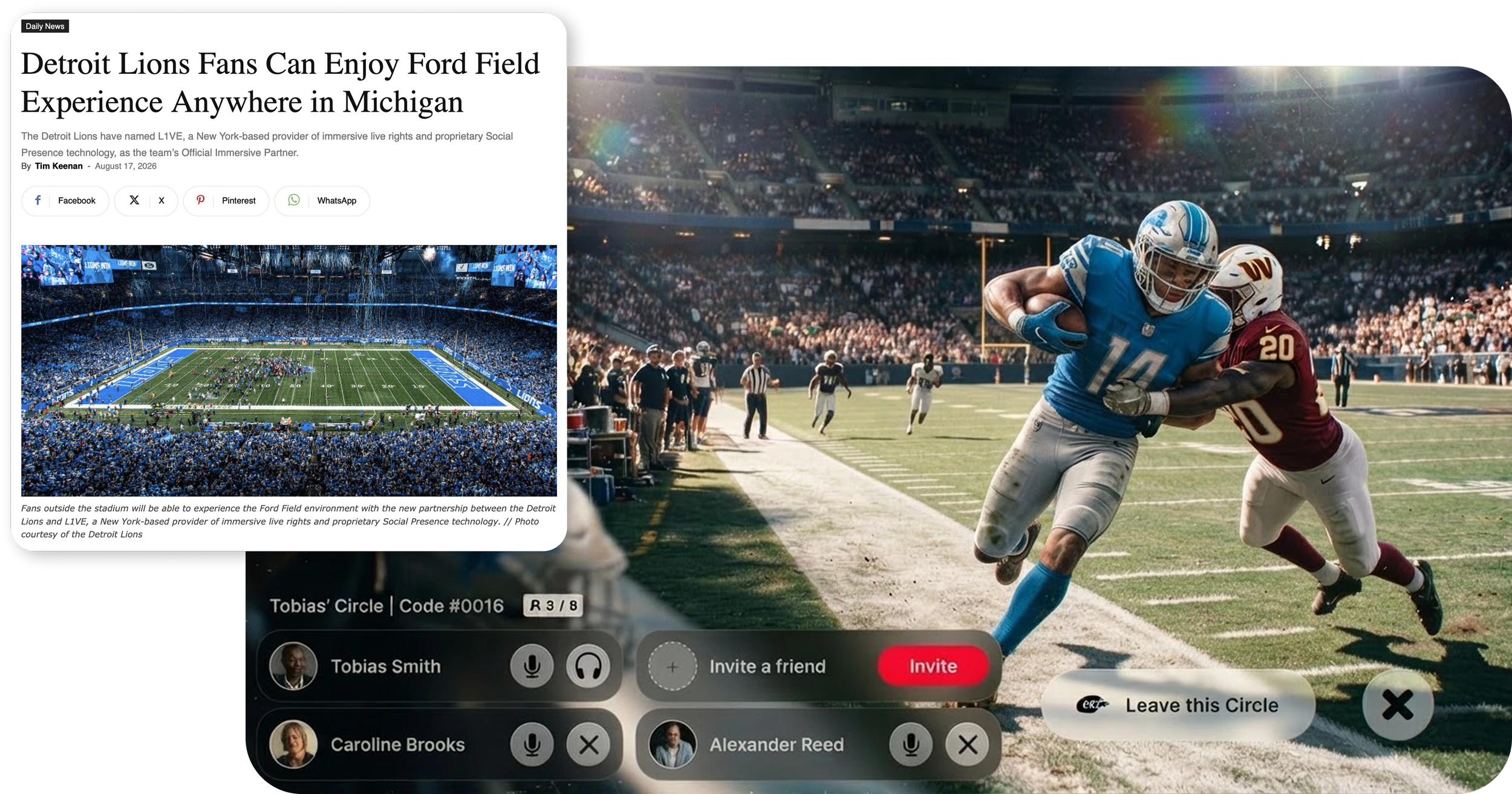
This isn't a demo product, it ships at the top of live sport. L1VE has gone live across ATP tennis, Bundesliga football, Formula E, and the NFL, where it was named the Detroit Lions' Official Immersive Partner, a partnership reported in the press, not promised in a deck. Designing for moments like these means the work has to hold up under real, unforgiving conditions, next to some of the biggest brands in sport, where the margin for a broken experience is zero. It's given me hands-on experience at the intersection of product design and major live rights-holders, the high-pressure, high-visibility context where design either earns its seat at the table or it doesn't.
WHY IT MATTERS
1VE began as raw technology with no product around it. What exists now, the experience, the design system, the brand, live at real events, is what design and a cross-functional team built on top of it. That's the throughline of how I work: taking something powerful but unformed and giving it craft, structure, and a reason for people to care, at the frontier of AI and spatial interaction. It's the kind of design leadership I want to keep doing, on the next thing that doesn't have a playbook yet.
Get in touch
luca.moos@googlemail.com
+49 1578 5429192
Prenzlauer Allee 26
Berlin, 10405